MEST
  • MEST
  • MAC 2025
  • MESTx
  • Our Entrepreneurs
  • MEST Updates
  • Report & Resources
  • Menu Menu

Celebrating a Decade of Real Estate Revolution: Meqasa’s Journey from MEST Incubator to Market Leader

Over the past ten years, Ghana’s real estate industry has undergone a revolutionary transformation, reshaping the way properties are bought, sold, and rented. With the real estate sector growing at an annual rate of 7.5%, it’s a thrilling time to be part of this evolving market. Amidst this flourishing landscape, we are delighted to turn the spotlight on Meqasa, a trailblazer in the sector who has been at the forefront of this groundbreaking change.

What started as a promising idea within the nurturing environment of the MEST Training Program has evolved into an inspiring success story that is reshaping the country’s real estate landscape. Ten years into their journey, we sat down with the team to understand how they have managed to distinguish Meqasa as a leader in Ghana’s real estate industry.

How it all started

Before the emergence of Meqasa, the Ghanaian real estate market faced a number of challenges. Conventional advertising methods, such as billboards and word-of-mouth, offered limited reach. Meanwhile, nascent online platforms offered scarce and often unreliable information, making house hunting an overwhelming ordeal for prospective homeowners and tenants.

Meqasa was born out of the need for a trustworthy and reliable online platform where property owners, real estate professionals, and potential buyers could interact with confidence. Over the past decade, the company has successfully delivered on this vision by offering a seamless and user-friendly platform, providing comprehensive details on listed properties and verifying the credentials of property owners and real estate agents.

Transforming the Real Estate Market

Meqasa’s transformative impact on the Ghanaian real estate market is evident through its successful bridging of the information gap, reinstating transparency and trust. By implementing agent and owner verification, extensive property listings, a convenient mobile app for on-the-go property search and listing, and an enlightening blog covering news, tips, and valuable insights on all things real estate, Meqasa has revitalised the industry and empowered users with reliable resources.

The Result?
Buyers and sellers now have a platform where they can connect without apprehension, knowing that they are dealing with verified individuals and companies. As a result, Meqasa has helped improve trust in real estate transactions while offering property owners and real estate professionals a direct and reliable route to their target markets.

Adapting to Change and Planning for the Future

As we reflect on Meqasa’s decade-long journey, it’s impossible to ignore the company’s remarkable adaptability and resilience. During the challenging times of the COVID-19 pandemic, Meqasa pivoted from hosting physical property fairs to organising Ghana’s first-ever online property fair, demonstrating their commitment to meeting the evolving needs of their customers.

“Looking towards the future, we see the real estate market in Ghana adopting more digital solutions. The rise of apartment complexes in urban areas and an increased demand for online services related to real estate signify a significant shift. This is as a result of high internet penetration especially in the growing middle class.. Meqasa, with its forward-thinking approach and commitment to innovation, is well-positioned to ride this wave and continue transforming the real estate industry in Ghana.” shared Kelvin Nyame, Co-founder and CEO, Meqasa.

Meqasa’s plans for future growth and expansion include introducing additional services to streamline transactions, partnering with reputable companies to enhance user confidence, and continue hosting their popular annual Meqasa Home and Property Fair.

As we raise a toast to Meqasa’s 10th anniversary, we’re excited about what the next decade will bring. Here’s to many more years of growth, transformation, and success. Congratulations, Meqasa! You’re indeed a testament to the power of a good idea, hard work, and resilience.

The next big event on Meqasa’s calendar is the annual Meqasa Home and Property Fair scheduled for August 2023. To learn more, visit this link.

https://meltwater.org/wp-content/uploads/2024/01/MEST-Logo_landscape_03-e1704132329210-300x49.png 0 0 wisdom https://meltwater.org/wp-content/uploads/2024/01/MEST-Logo_landscape_03-e1704132329210-300x49.png wisdom2025-02-27 00:21:572025-02-27 00:23:18Celebrating a Decade of Real Estate Revolution: Meqasa’s Journey from MEST Incubator to Market Leader

Essential Skills for Developers & Software Teams Today – A Quickfire Chat with Jesse Johnson (MEST ‘15)

Jesse Johnson is a senior software engineer with a wealth of experience in the tech industry. He graduated from the MEST Class of 2015 where he co-founded church management app, Asoriba. He is passionate about building great software products that make users happy. From co-founding Asoriba to making significant contributions at Invoice2go/Bill.com, Jesse’s journey is a testament to resilience, ambition, and constant evolution.

In this quickfire chat, Jesse shares his insights on the most important skills for developers, how tech teams can be more efficient, the exciting future of generative AI, and his insightful perspectives on software development’s future in Africa. He also reflects on his time at MEST Africa and the lessons he learned that still apply to his work today.

MEST: What’s the most important skill for a software developer to have and why?
Jesse: As Falk Benke, a technology fellow from my days at MEST Africa, put it (in our first lesson): “Read and follow instructions”. Most of the life of a software engineer is spent reading and understanding documentation, specifications, existing code, and more. It goes without saying that doing this well makes a better developer. Debugging is another valuable skill closely related to the other half of Falk’s advice, and it plays an important role in building the capacity to understand (and improve) working systems.

Jesse with colleagues and faculty at MEST — Class of 2015

MEST: Share three things tech teams can do to be more efficient in delivering quality products.
Jesse: I believe efficiency is more likely when teams are ruthless with what they focus on. If the focus is on delivering quality products — as it should be — there are a few things I think are really important to keep on top of a tech team’s mind: first is to respect the user. This point is more easily felt that stated. High-quality software products excel at not only doing what the marketing claims. They make their users happy. They don’t frustrate them. Discerning users can tell when a lot of thought was put into making a product.

Another thing tech teams need to be mindful of is their own dev experience. Frustrations during development make it harder to build great software. Investing in the best tools, keeping up-to-date with industry conventions, and “always moving forward” will play a crucial role in making the experience of building and shipping good software great.

One final thing is to close the loop by incorporating feedback into the engineering process early and using it often. Everything from scrum ceremonies to analytics and app monitoring should inform the team on how well it’s doing the most important thing. This may seem obvious, but it can be surprising how much is overlooked when teams are not intentional about feedback.

MEST: What’s one thing you’re excited about in the world of software development right now?
Jesse: Generative AI, of course! Software development tools keep getting sophisticated, empowering teams to work on even more ambitious projects. Generative AI tools such as intelligent coding assistants take this up a notch by allowing developers to work on a slightly higher level. That alone opens up more opportunities to make amazing things. It has a lot of potential to change dev x.

MEST: What’s your opinion on the future of software development in Africa?
Jesse: Africa’s young population pretty much guarantees a progressive technology culture, and the folks that build software will be an important part of the near future. Our unique development path also allows us the opportunity to learn from the experiences of other countries even as we blaze our own trail on the continent and set new standards for the rest of the world to consider.

Jesse with some founding members of Asoriba, the startup he founded through the MEST Training Program

MEST: What skill or lesson has stayed with you since your days at MEST?
Jesse: My time at MEST and in the Incubator with Asoriba taught me several ways to build resilience and focus on getting stuff done. It’s hard to pinpoint one skill or lesson, but the environment of great opportunity, ambition, brilliance, and searching for success in a challenging market contributed a lot to shaping who I am today.

Jesse Johnson, an accomplished senior software engineer, has forged a remarkable career path. As a co-founder and mobile engineering lead at Asoriba, he spearheaded streamlined product releases and established the company’s QA team. With a successful tenure at an audiobook startup, he later contributed to a greenfield project at Invoice2go/Bill.com, enhancing front-end monitoring. Jesse’s extensive experience has honed his expertise in engineering culture, product design, development, and efficient team delivery. Jesse also volunteers as a technical consultant under the MEST Alumni SAGE program where he supports and advises MEST alumni, companies, and Entrepreneurs-in-Training.

https://meltwater.org/wp-content/uploads/2024/01/MEST-Logo_landscape_03-e1704132329210-300x49.png 0 0 wisdom https://meltwater.org/wp-content/uploads/2024/01/MEST-Logo_landscape_03-e1704132329210-300x49.png wisdom2025-02-27 00:18:462025-02-27 00:19:15Essential Skills for Developers & Software Teams Today – A Quickfire Chat with Jesse Johnson (MEST ‘15)

Empowering Africa’s Digital Retailers: Kamel’s Revolutionary E-commerce Platform

According to findings by BCG in 2022, Africa’s retail industry is undergoing a transformative shift driven by the continent’s growing digital ecosystem and a rising generation of young, educated, and digitally engaged vendors. These visionary entrepreneurs are embracing digital solutions, such as online marketplaces and digital payment systems, to modernize their retail businesses.

Kamel, a MEST portfolio company, recognizes the potential of this evolving group of retailers and aims to revolutionize the way Africans sell and buy online. It was founded to offer small and medium-sized retailers a seamless way to transact across multiple digital channels. As the business has grown, it has evolved to include a game-changing reseller model and verified review system that promises to exponentially build trust in and drive growth for Africa’s digital retailers.

Expanding Reach Through a Community of Resellers:

For small vendors and individual entrepreneurs, expanding their customer base can be a daunting task. However, Kamel addresses this challenge by connecting vendors with a vibrant network of resellers. Leveraging the resellers’ extensive social networks, vendors can significantly broaden their reach, leading to increased sales and heightened business awareness. Research indicates that 74% of consumers make purchase decisions based on word-of-mouth recommendations. Kamel’s community of resellers not only empowers vendors but also strengthens the bonds within communities, creating economic benefits that extend throughout local networks.

Enabling Multi-channel Retail for Small and Medium Vendors

Adaptability and versatility across multiple platforms are essential for business success. Kamel empowers small and medium-sized vendors to effortlessly sell and manage their online stores across popular social media channels such as Facebook, Instagram, Twitter, and WhatsApp. Recent data reveals that Africa’s active social media user base exceeded 380 million in 2022, offering a vast market that Kamel effectively taps into. By harnessing the power of social media, Kamel ensures products are easily accessible to a wider audience, granting retailers unprecedented visibility and fostering heightened customer engagement.

Building Trust in Digital Retailers with Verified Reviews

Trust is the cornerstone of any thriving retail operation, and Kamel has prioritized this vital element from the outset. Recognizing the significance of customer reviews, Kamel has implemented a robust system that allows customers to provide verified feedback and ratings for both products and vendors. Studies reveal that 84% of consumers trust online reviews as much as personal recommendations when making a purchase. By cultivating a sense of community among buyers and facilitating informed decision-making, Kamel has built an environment where trust thrives, fostering long-lasting relationships between vendors and customers.

In essence, Kamel’s journey in the e-commerce space exemplifies a comprehensive retail solution designed for the digital age. By offering a seamless online retail experience, fostering trust through verified reviews, and expanding customer reach through a well-motivated reseller community, Kamel is not just facilitating retail, it is transforming lives, propelling economic growth, and redefining the retail landscape in Africa.

Learn more about Kamel.


https://meltwater.org/wp-content/uploads/2024/01/MEST-Logo_landscape_03-e1704132329210-300x49.png 0 0 wisdom https://meltwater.org/wp-content/uploads/2024/01/MEST-Logo_landscape_03-e1704132329210-300x49.png wisdom2025-02-26 23:57:352025-02-26 23:57:35Empowering Africa’s Digital Retailers: Kamel’s Revolutionary E-commerce Platform

MEST Portfolio Company, Agro Innova, Secures Investment from AV Ventures to Digitalize West African Agriculture

We’re absolutely thrilled to announce that Agro Innova Limited, a MEST Portfolio Company, has attracted a strategic investment from AV Ventures LLC, a for-profit subsidiary of ACDI VOCA. This new collaboration is set to propel Agro Innova’s ambitious mission to digitalize the agriculture sector across Africa, starting with West Africa.

What’s more, this investment paves the way for Agro Innova to develop more farmer-centric digital solutions to tackle the challenges faced by smallholder farmers. It also accelerates the delivery of digital products and services, improving the economic livelihoods of these farmers, many of whom are women and youth.

Moses Mallaghan, CEO, Agro Innova

“As the CEO and Founder of Agro Innova, I envision a future where the power of digitalization, coupled with financial support from AV Ventures, unlocks the full potential of the agricultural sector. Through innovative technologies and strategic partnerships, we are building the foundations for the sustainable growth of the agriculture sector in Ghana and the West African Sub-region”, said Moses Mallaghan, CEO of Agro Innova.

Towards Sustainable Impact

Agro Innova, through its digital platforms, empowers farmers to digitalize their day-to-day farm activities and make data-driven decisions. Agro Innova also leverages its digital platforms to facilitate access to market opportunities, production inputs, and information on climate-smart agricultural practices for smallholder farmers. Agro Innova’s digital platforms demonstrate the transformative potential to revolutionize the agricultural sector through digitalization. With its cutting-edge technologies and innovative digital solutions, Agro Innova can contribute to enhancing the efficiency, sustainability, and profitability of key agricultural value chains such as grains and poultry which have a high participation of women and youth.

Through its established digital marketplace and other platforms, Agro Innova supports smallholder farmers and agribusinesses with real-time insights by connecting farmers directly with buyers and other value chains which enables them to make informed decisions about resource allocation, best farming practices, yield optimization, and eliminating intermediaries. This enhanced level of precision and control not only maximizes productivity but also makes farmers adaptive to climate change and minimizes environmental impact by reducing the unnecessary use of resources while fostering fair and transparent pricing.

At MEST, we’re immensely proud of Agro Innova’s achievements and look forward to witnessing their continued growth and transformative impact on the agricultural sector in West Africa.

Source: https://www.acdivoca.org/2023/06/av-ventures-invests-in-agro-innova-limited-to-digitalize-the-agriculture-sector-in-west-africa/


https://meltwater.org/wp-content/uploads/2024/01/MEST-Logo_landscape_03-e1704132329210-300x49.png 0 0 wisdom https://meltwater.org/wp-content/uploads/2024/01/MEST-Logo_landscape_03-e1704132329210-300x49.png wisdom2025-02-26 23:50:212025-02-26 23:53:06MEST Portfolio Company, Agro Innova, Secures Investment from AV Ventures to Digitalize West African Agriculture

How Shopa is taking over Ghana’s informal retail market with empathy & a customer-centric approach

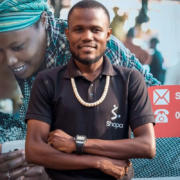
Informal retail is one of the biggest economic sectors representing 50% of official GDP in sub-Saharan Africa, but it is largely under-served. In Ghana, the informal retail sector accounts for 80% of the Ghanaian workforce. Although a burgeoning sector, women in underprivileged communities who form a majority of informal retailers are faced with the challenge of restocking products at high costs and barely having access to credit to run their businesses. Ulric Chekap is the co-founder of Shopa, a MEST portfolio company that is redefining informal retail and revolutionizing how informal retailers access and restock their products. They do this while providing practical solutions to the credit challenges of informal retailers.

In the interview that follows, Ulric Chekap shares what his motivation together with his co-founders has been and shares some insights on the future of informal retail in West Africa.

  1. In less than 2 years, Shopa has conducted over 30, 743+ transactions; reached 3,288 customers and has partnered with over 50 manufacturers and suppliers. Tell us the need in the market Shopa sought out to address and how you have managed to gain such traction over a short period of time.

After spending close to six months researching this space, my co-founders and I realized that about 20 million informal retailers in Africa, mostly women living in underprivileged communities, need to frequently restock products they want to sell at the lowest cost from wholesalers they can rely on. They also needed access to credit to manage restocking and the running of their business. However, they were unable to do so because of:

  • The extra money required to handle transportation to the open market;
  • High margins added on products by wholesalers;
  • Sales lost by closing their shops to go to the market to restock;
  • And the inability to access credit from microfinance institutions because they were mostly classified as not credit-worthy.

We have been able to gain traction because we have differentiated ourselves from our competitors. The following reasons account for our exponential growth:

  • We ensure 1–4 hours of delivery time to our customers. While our competitors are doing 24–48 hours.
  • We give our customers the flexibility to buy in bits (a unit or a portion of a box or carton). This is something our competitors do not do. Hence, we are able to fulfill orders of the equivalent of at least $10. Competitors are usually in the $50 bracket.
  • We allow our customers to buy now and pay later at the cheapest interest rate on the market.
  • We are a customer-centric business, with customized answers to their needs.
The Shopa Team

2. Where do you see Shopa in the next 3–5 years?

In five years, we hope to see Shopa become the biggest tech player in the informal retail sector across West Africa. On the one hand, by assisting informal retailers in obtaining inventory on cash or credit, handling all payment transactions, and acquiring new customers. On the other hand, we also hope to provide relevant and insightful data analytics reports to suppliers and manufacturers to allow them to achieve better growth at efficient costs in their different African markets.

3. Shopa then (when it started) versus what it is now, what are some significant milestones you have achieved?

We have over 3,300 customers just in Accra (Ghana) and we have crossed the bar of a monthly total transaction of $150,000 with an average of 120 orders fulfilled per day.

4. Shopa offers app-based services, how has the digital divide and high cost of internet affected your business and what solutions do you offer to counter that?

The digital divide is real in our market. We are dealing with customers who are not always tech savvy. We are addressing this issue through our sales agents who work on the field with our customers in order to teach them how to use our digital solutions. We have also put in place a multichannel approach for non-tech customers, such as USSD technology, SMS, and phone calls.

Co-founders of Shopa

5. Who are the most essential people to have on your team in the early stages of building a startup and how do you spot great talent for your team?

For a tech startup, you need three essential people: dreamers, doers and thinkers.

We spot great talent by evaluating their commitment to serve our customers’ needs.

6. What are the fundamental/ key qualities every startup founder/leader should possess or learn

A passion to solve customers’ needs, think down to earth, work hard and smart, and have a high sense of empathy.

7. What excites you about the future of Africa’s retail market and what role will Shopa play in it?

The proliferation of the internet across the continent and the massive adoption of smartphones and new digital means of payment are going to change a lot of things in Africa’s retail market. Shopa intends to seize those opportunities to boost the productivity of a huge number of informal retailers.

8. How has being a MESTer contributed to and prepared you for your entrepreneurship journey?

Being part of a community that is creating opportunities and leaving a legacy for the next generation of entrepreneurs in Africa has made me being a part of the MEST Community worthwhile.

About Ulric Chekap

Ulric obtained a bachelor’s degree in Business Computing at the University of Picardie Jules Verne in France in 2012. He went on to work as a relationship manager at Financial House S.A., a microfinance institution in Cameroon, for 2 years, where he facilitated SME loans.

Later on, he worked for over 4 years in retail sales and wholesale distribution for Diageo Guinness Cameroon S.A.

Ulric is passionate about providing lasting solutions to disadvantaged informal retailers in Ghana and beyond.

https://meltwater.org/wp-content/uploads/2023/06/shopa.webp 1000 800 wisdom https://meltwater.org/wp-content/uploads/2024/01/MEST-Logo_landscape_03-e1704132329210-300x49.png wisdom2023-04-10 23:29:282024-05-15 12:20:19How Shopa is taking over Ghana’s informal retail market with empathy & a customer-centric approach

Making a Move from Media to Tech: My MEST Story – By Yaw Antwi Owusu (MEST Alumnus, Class of 2022)

Taking a Leap of Faith

It’s been said that life begins at the end of our comfort zone, and that’s precisely where I found myself in December 2021 when I quit my job in the media industry and took a leap of faith into the exciting and ever-evolving world of tech. I’m Yaw Antwi Owusu, a young and ambitious African with a passion for technology and a deep desire to build a career in the industry.

Join me as I share my journey of taking risks, embracing new opportunities, and surrounding myself with a supportive community that helped me achieve my dreams.

For as long as I can remember, I’ve always had a passion for technology. I knew transitioning was a risky move, but I also knew that it was what I wanted, and I was determined to make it work.

Tech and More…

Shortly after leaving my media job, I joined MEST Africa’s Training Program, which lasted eight months. During this program, I was able to learn a lot about building a software company.

MEST Class of 2022 — Graduation Ceremony

I wrote my first line of dart code, met business partners, and built lifelong friendships. I also teamed up with others to explore different viable business ideas and build three MVPs, which was a great experience.

Ubadi Technologies — Team

It was during the MEST program that I met my co-founders, Somto, Poga, and Philip. Besides building tech solutions and businesses, we embarked on some exciting adventures like walking through the Nkofieho Caves and climbing Mount Afadjato. I had an amazing time through the ups and downs of it all. These experiences brought us closer together and helped us to develop stronger bonds.

MEST Class of 2022 — Team Bonding trip to Aburi Gardens and Mount Afadjato, Ghana’s highest Peak

We brainstormed ideas for our business, talked to teenagers and parents to validate our ideas, pitched our ideas to investors, and built our product — the Ubadi App. This was an amazing experience, and we learned a lot along the way. Finally, we started and incorporated Ubadi Technologies.

My journey into the tech industry hasn’t been easy, but it’s been worth it. I’ve learned the importance of taking risks, being open to new opportunities, and surrounding myself with like-minded individuals who can provide support and guidance. I’m excited about what the future holds, and I know that with determination, hard work, and the right mindset, anyone can achieve their dreams.

Looking Ahead

My team and I are excited to continue making a significant impact in the tech industry after successfully graduating from the MEST Training Program. MEST has been an amazing launchpad into our tech career and we are grateful for all the opportunities that keep coming our way as members of this vibrant community.

Thank you for taking the time to read my story, and I hope it has inspired you to pursue your dreams with passion and determination. Recruitment for the MEST Class of 2024 is ongoing, take a chance on yourself by applying for the program if you desire to build a career in tech and entrepreneurship.

https://meltwater.org/wp-content/uploads/2024/01/MEST-Logo_landscape_03-e1704132329210-300x49.png 0 0 wisdom https://meltwater.org/wp-content/uploads/2024/01/MEST-Logo_landscape_03-e1704132329210-300x49.png wisdom2023-04-10 23:02:442025-02-27 15:02:51Making a Move from Media to Tech: My MEST Story – By Yaw Antwi Owusu (MEST Alumnus, Class of 2022)

Meet Three Female MEST Alumni Transforming how Businesses Operate with AI, Blockchain, and Omnichannel E-Commerce

Artificial intelligence, blockchain, and omnichannel platforms are three cutting-edge technologies that are transforming the way businesses around the world operate. While these technologies are still relatively new, trailblazers are already changing the game with their innovative use of these technologies to transform how businesses in Africa can be more efficient and productive.

Here are three female founders and MEST alumni, who are leading the charge in the fields of AI, blockchain, and omnichannel platforms, and are transforming business processes and customer experiences on the continent:

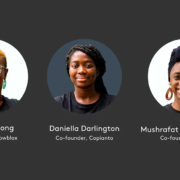
Daniella Darlington
  1. Daniella Darlington: Changing the Marketing Game with AI

Daniella Darlington is a co-founder of Copianto; an AI-backed all-in-one content creation and optimization platform designed for copywriters, marketers, entrepreneurs, and agencies. Her work at Copianto has helped to simplify the content development and creative processes of marketing teams, content developers, and freelancers. This technology is being used by corporates, startups, and advertising agencies in Ghana to improve their brand experience and enhance marketing efforts faster and cheaper than before. But before founding Copianto with her team through the MEST Program, Daniella was pursuing a career in law and now leads the operational aspect of the startup.

Mary Okwong

2. Mary Okwong: Revolutionizing Careers and Industries with Blockchain and Web3

Mary Okwong is a co-founder of Mowblox, a learning platform that is increasing African participation in the Crypto, Blockchain and Web3 space. Mowblox supports individuals and businesses alike to identify new opportunities and create new economies with blockchain and web3 technologies. Mary leads the team of experts at Mowblox to create engaging educational content and events that introduce individuals to endless career opportunities in the space. Businesses are also supported to explore the various ways they can improve business data, transactions, and customer experiences with blockchain and web3.

Mary is a blockchain enthusiast who is passionate about onboarding the next generation of Africans looking to upskill and grow their career in the blockchain and crypto space.

She has gained first-hand experience in the blockchain space by interacting with protocols on several blockchains, her support for crypto public goods, and her contributions to governance activities in decentralized autonomous organizations (DOAs).

Mushrafat Abdulrahman

3. Mushrafat Abdulrahman: Transforming Africa’s Retail Industry with Omnichannel Platforms

Mushrafat Abdulrahman is a co-founder of Kamel; a multi-channel commerce solution that enables entrepreneurs in emerging markets to easily start, manage, and grow their businesses across multiple online and offline channels. Multi-channel or omnichannel e-commerce, refers to the integration of multiple channels, such as brick-and-mortar stores, online marketplaces, and social media, into a seamless customer experience. Mushrafat and the Nigerian-based Kamel team are changing what it means to manage a medium to small retail business in Africa by using technology to create seamless and personalized shopping experiences for customers. By integrating multiple channels into one application, Mushrafat and the team at Kamel are enabling retail businesses in Africa to reach customers where they are for increased sales and a personalized shopping experience.

As AI, Blockchain, Web3 and e-commerce continue to grow in importance, more and more African businesses are looking for ways to deploy these technologies to simplify their processes and deliver value to customers. We are proud to see these three women from our Training Program taking the charge and leading the pack to drive these business goals and paving the way for a more advanced and connected future. Join us to celebrate Daniella Darlington, Mary Okwong and Mushrafat Abdulrahman, and all other female founders and females in tech this International Women’s Month!

Over the years, MEST has produced many successful entrepreneurs, and the alumni network continues to grow. Recruitment for the MEST Class of 2024 is ongoing, take a chance on yourself by applying for the program if you desire to build a career in tech and entrepreneurship.

https://meltwater.org/wp-content/uploads/2023/04/1_BuBuhNyVBRM4iHG8Sczl4Q-1.webp 621 1400 wisdom https://meltwater.org/wp-content/uploads/2024/01/MEST-Logo_landscape_03-e1704132329210-300x49.png wisdom2023-04-10 22:53:162024-05-15 12:20:55Meet Three Female MEST Alumni Transforming how Businesses Operate with AI, Blockchain, and Omnichannel E-Commerce
  • All
  • Reports
  • Case Studies
  • Webinars

  • EdtechFellowship
  • Team
  • Reports and Resources
  • Careers
  • Contact
  • Cookie Policy
  • Privacy Policy
  • Join the Community

  • Edtech Fellowship
  • Team
  • Contact
  • Newsletters

@ MEST 2025. All right reserved

Scroll to top